Managing your blood pressure at home
High Blood Pressure (Hypertension)
High blood pressure (also called hypertension) often has no symptoms. If it stays high over time, it can lead to serious health problems, including:
- Heart disease
- Heart attacks
- Strokes
- Heart failure
- Poor blood flow to your legs (peripheral arterial disease)
- Swollen blood vessels (aortic aneurysms)
- Kidney disease
- Memory loss vascular dementia
In England, more than 1 in 3 adults has high blood pressure. Checking your blood pressure is the first step to staying healthy. Lowering your numbers even a little bit helps protect your health.
How to Take Your Blood Pressure at Home
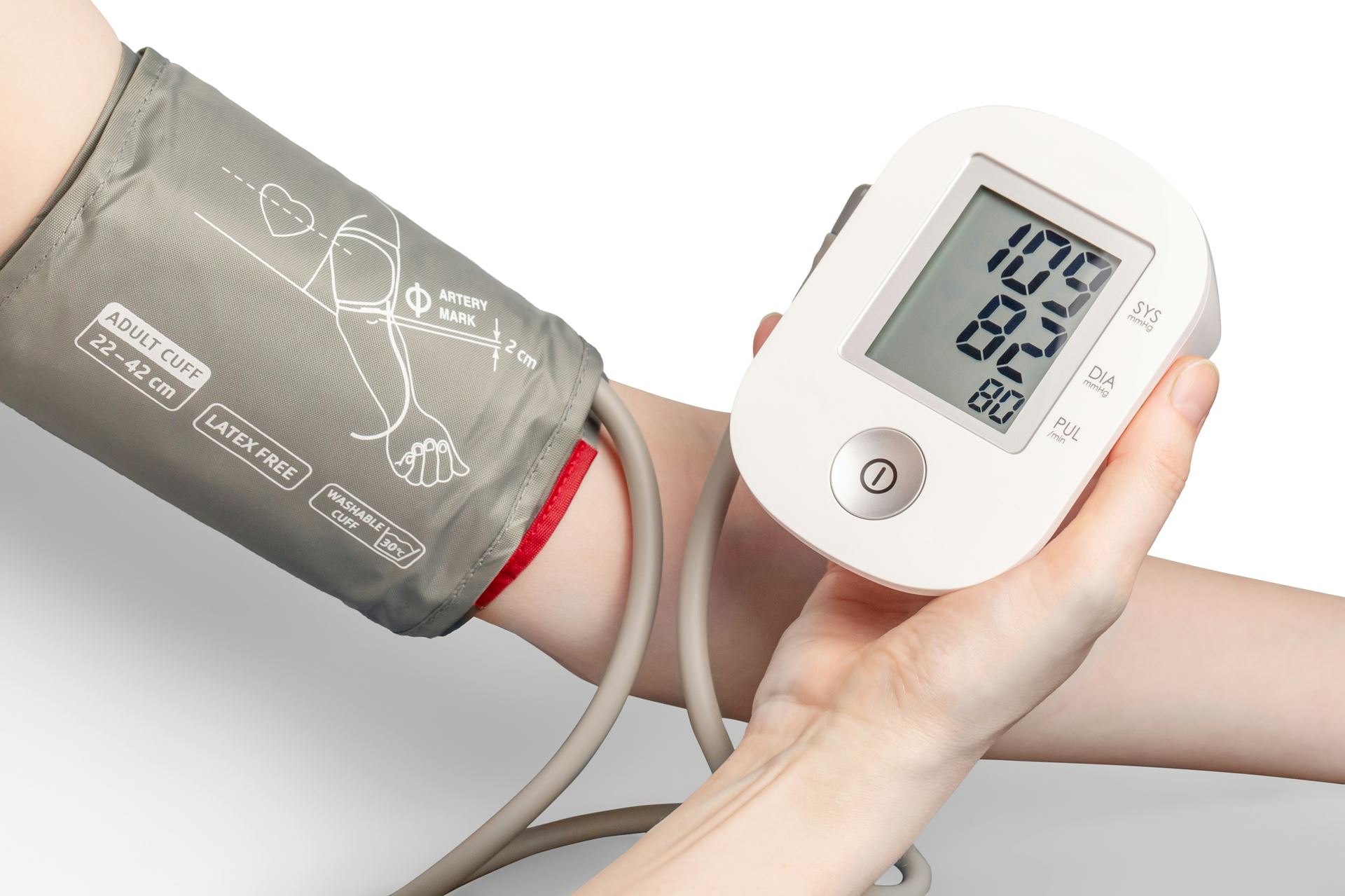
Your body needs to be resting to get a true reading. Do not check your blood pressure if you are in pain, stressed, or rushing.
Simple Steps for a Good Reading:
- Rest: Sit quietly for 5 minutes before you start. Do not exercise, drink tea or coffee, or smoke in the 30 minutes before.
- Sit properly: Sit up straight with your back supported and both feet flat on the floor. Do not cross your legs.
- Arm level: Rest your arm on a table so the cuff is level with your heart.
- Stay still: Do not move or speak while the machine is running.
- Repeat: Take 2 readings, 1 to 2 minutes apart. Do this twice a day (morning and evening) for 7 days.
For more detailed stsep by step guidance, read our advice for taking blood pressure readings at home.
Sending Your Readings to the Surgery
Sending your readings online is the fastest way to add them to your medical record:
-
Online (Fastest): Send your blood pressure readings using SystmConnect or open SystmConnect safely inside your NHS App.
-
In Person: Bring your filled-in paper diary to Reception at Lake Road Surgery. Please write your full name, date of birth, and phone number clearly on the sheet.
Patient Guide & Diary Download
-
Download our Home Blood Pressure Monitoring Guide and Weekly Diary [PDF, 332KB]
-
This guide explains step-by-step how to check your blood pressure, calculate your 7-day average, and submit your results to the practice.
-
Urgent advice: When to Get Urgent Medical Help
Call for help right away if:
- Your top number is 180 or higher, or your bottom number is 120 or higher, AND
- You have severe chest pain, a bad headache, or trouble breathing.
Actions:
- Call the surgery immediately.
- Call 111 if we are closed.
- Call 999 or go to A&E in a life-threatening emergency.
Help to live healthier
Want to:
- Get fit?
- Lose weight?
- Stop smoking?
You can self refer to LiveWell Dorset
- Visit the website
- Call 0800 840 1628
Page created: 14 October 2026