HPV vaccination
Human papillomavirus (HPV)
Human Papillomavirus (HPV) is a very common group of viruses. While most types are harmless, some can lead to serious health issues. Since the NHS began the vaccination programme, we have seen a dramatic decrease in young people developing genital warts and, most importantly, cervical cancer.
It’s Not Just for Girls
A common misconception is that HPV only affects women. In reality, HPV is linked to several cancers that affect men, including cancers of the head, neck, and throat.
By ensuring your son receives the vaccine at age 12 or 13, you are providing him with long-term protection against these diseases. It is about protecting all our children from preventable cancers.
About HPV
- HPV has no symptoms, so you may not know if you have it. It's very common and most people will get some type of HPV in
their life. - Most types of HPV are harmless. But some types are linked to an increased risk of certain types of cancer, including
cervical, mouth and penile cancers. - High-risk HPV DNA is found in over 99% of all cervical cancers. However, having HPV does not mean that you have or will
develop cervical cancer. It's very common. Most people will get some type of HPV in their life. - Even if you've had a HPV vaccination it's important that you attend your cervical screening appointment when invited
because the HPV vaccine doesn't protect against all strains of HPV.
About the HPV vaccine
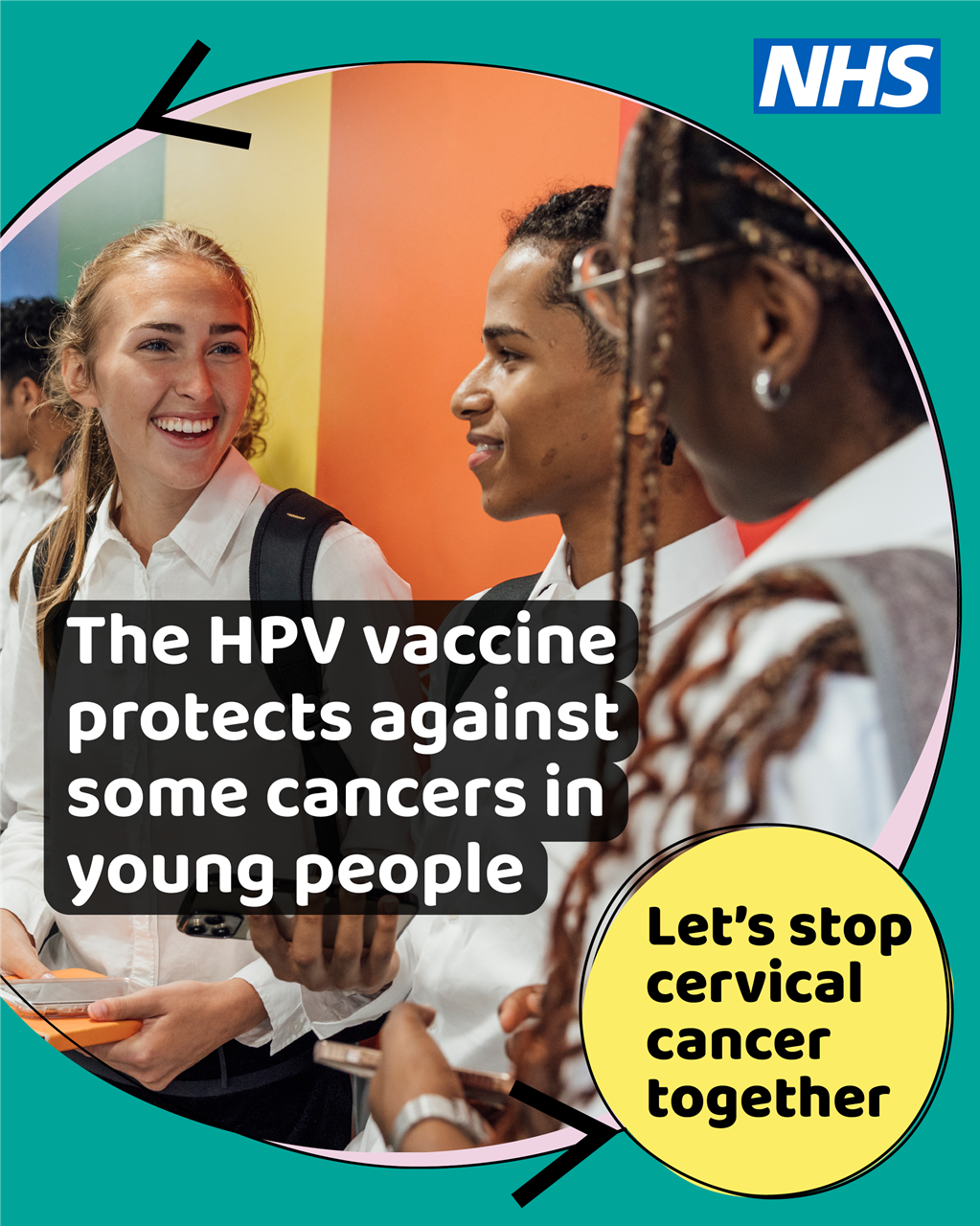
- The HPV vaccine protects against most types of HPV, which is a virus that causes most types of cervical cancer.
- HPV vaccine prevents 9 out of 10 cases of cervical cancer. It's quick, safe, and the best protection you can give your child
against future cancer risk. Most side effects are mild and temporary - just like other routine vaccinations. - The NHS offers the HPV vaccine to boys and girls from the age of 12-13. Girls under 25 and boys born after 1 September
2006 who missed their HPV vaccine at school, can also catch up at their GP. - Protecting your child against future cancer is one of the most powerful things you can do as a parent. The HPV vaccine is
safe, effective, and has already prevented thousands of cancers in the UK. Contact your school nurse, school vaccination team or GP surgery if you or your child were eligible for the HPV vaccine but did not get vaccinated. - Since the introduction of the HPV vaccine, there has been a large drop in the number of young people getting conditions
linked to HPV, such as cervical cancer and genital warts. Please sign your child’s consent form when you receive it.
Missed the school session? Don't worry. Contact the surgery today to get your child caught up.
Page created: 14 October 2026