Measles, Mumps, Rubella and Chickenpox
Page last reviewed: 10 January 2026
Page created: 13 April 2023
Page created: 13 April 2023
We've put some small files called cookies on your device to make our site work.
We would also like to use google translate cookies and analytical cookies to understand how our site is used and improve user experience. Analytical cookies send information to Google Analytics.
Let us know your preference. We will use a cookie to save your choice. Before you make your choice you can read more about our cookie policy.
You can change your cookie settings at any time using our cookie policy.
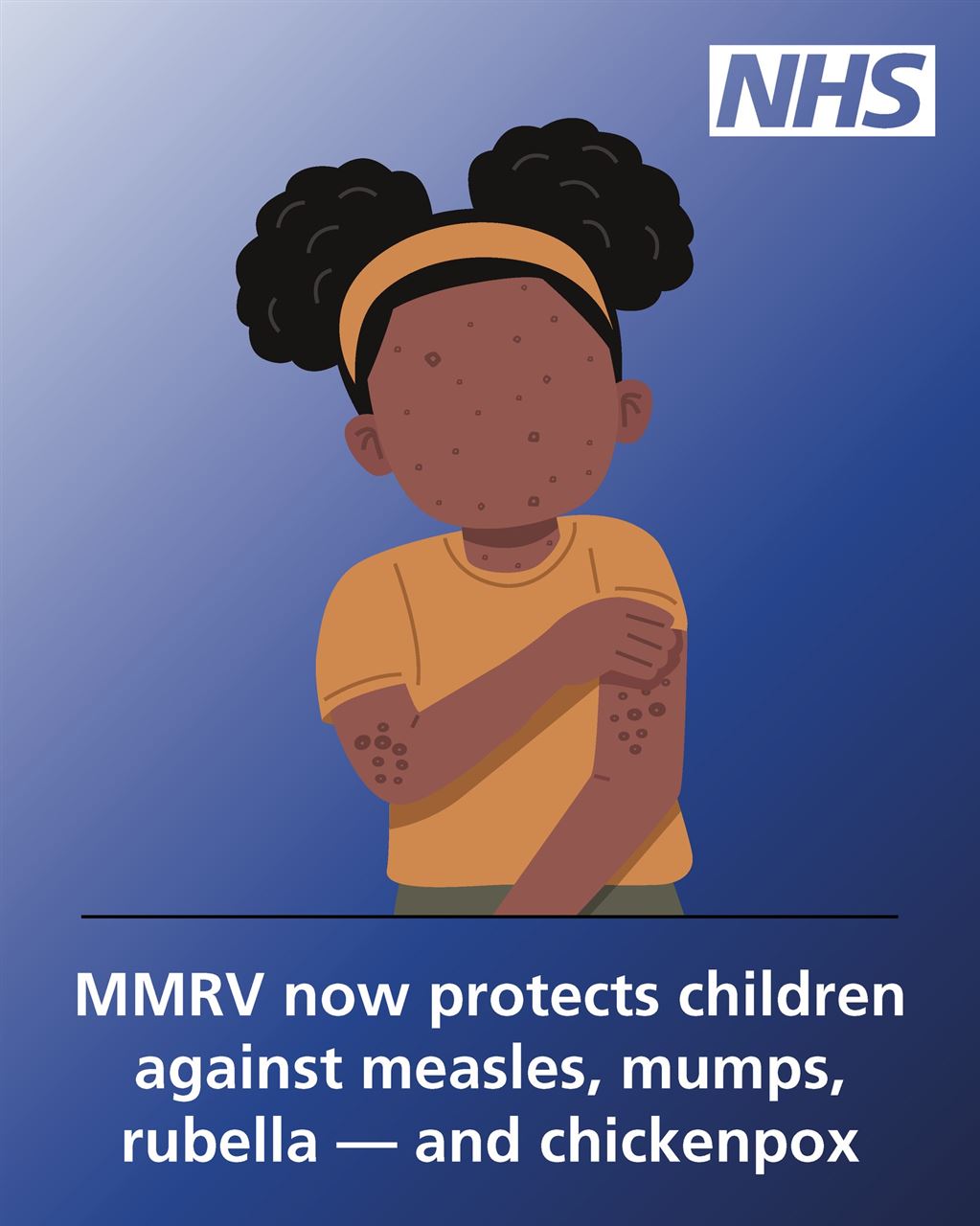
The MMRV vaccine is a safe and effective combined vaccine that replaced the MMR vaccine in the routine schedule on 1 January 2026. It protects your child against four serious illnesses in fewer injections:
These conditions are highly infectious and can spread easily between unvaccinated people.
Why the change?
The addition of the chickenpox component (Varicella) helps prevent this common, easily spread infection in children. It is usually mild, but it can lead to serious complications which need hospitalisation, including chest infections and fits.
By using the combined MMRV vaccine, the NHS has also moved the second dose earlier (from 3 years 4 months to 18 months) to ensure children are fully protected before they start nursery or pre-school.
The Vaccination Schedule
Two doses of the vaccine are required for lifelong protection. There is currently no medical treatment for measles, so vaccination is the only way to prevent becoming seriously unwell.
The MMR vaccine is still available for older children and adults born on or before 31 December 2019 who were not vaccinated against measles, mumps and rubella when they were younger.
Visit the NHS website for more information about the MMRV vaccine here>>
Measles usually starts with cold-like symptoms, followed by a rash a few days later. Some people may also get small spots in their mouth.
IMPORTANT: If you think you or your child may have measles, please do not attend the surgery. Please contact us in the first instance via phone on 01202 822825 or 01725 517272 or email cranborne.reception@dorsetgp.nhs.uk.
The Practice will apply infection prevention and control measures in the management of face to face appointments required to treat or vaccinate patients against the measles. When visiting our surgeries, please follow any instructions you are given to minimise the risk of spread of infection to patients and staff.
MMR is part of the NHS Routine Childhood Immunisation Programme – with one dose offered at one year and another second dose at 3 years 4 months. Parents whose infants missed out, or anyone of any age who has not yet had a vaccine, are urged to come forward.
Contact us if you think you or your child may have missed either of these two doses. Please phone us on 01202 822825 or 01725 517272 or email cranborne.reception@dorsetgp.nhs.uk